If you have cleaned mold off your basement walls more than once, the problem is not your cleaning product. It is your wall assembly. Basements in Etobicoke deal with persistent moisture conditions that standard gypsum board simply was not designed to handle. The fix starts with understanding why the mold keeps coming back, and then making a material change that stops the cycle. Mold resistant drywall for basement applications exists specifically for this problem, and this blog walks through exactly what causes the issue and what actually works.
Table of Contents
- Why Does Mold Keep Appearing on Basement Drywall?
- What Is the Difference Between Standard and Mold Resistant Drywall?
- Is Mold on Drywall in a Basement a Health Risk?
- When Is It Time to Call a Professional Instead of Treating It Yourself?
- Stopping the Cycle With AR Quality Construction
- Frequently Asked Questions
Why Does Mold Keep Appearing on Basement Drywall?
Most basements deal with moisture on two fronts. The first is liquid water intrusion through the foundation wall or floor slab, which shows up as visible dampness, efflorescence (the white mineral deposits left when water evaporates through concrete), or actual pooling. The second is vapor transmission, which is less visible but equally damaging. Even a fully waterproofed concrete wall allows moisture vapor to pass through it, and that vapor condenses on the cooler interior surfaces of the wall assembly.
Standard gypsum drywall has a paper face. Paper is a cellulose material, and cellulose is exactly what mold needs to establish and grow. When that paper face is exposed to persistent humidity, mold colonizes within days. According to Health Canada, mold can begin growing on a damp surface within 24 to 48 hours under the right temperature and humidity conditions. That is not a slow process. Once mold is growing inside the wall cavity, surface cleaning does not reach it. You are removing the visible portion while the colony continues to grow behind the board.
What Is the Difference Between Standard and Mold Resistant Drywall?
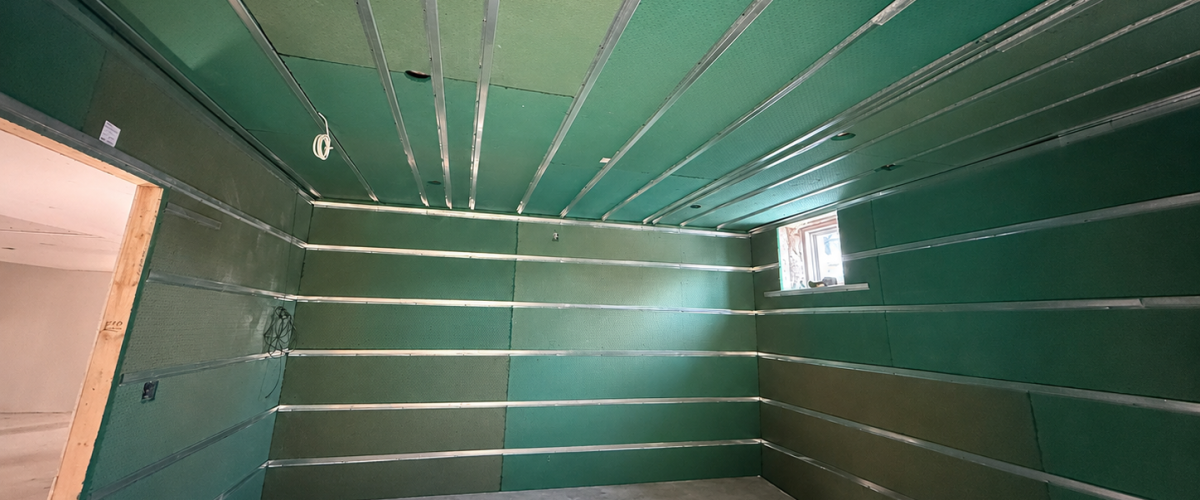
Mold resistant drywall for basement applications uses a fiberglass mat face instead of the paper face used on standard gypsum board. Fiberglass is not a cellulose material, which means it does not provide a food source for mold. The core of mold-resistant board also typically contains additives that inhibit mold growth within the gypsum itself.
Common products in this category include USG Sheetrock Mold Tough, CGC Sheetrock Brand Mold Tough, and National Gypsum Gold Bond XP. These products are rated to ASTM D3273, which is the standard test method for resistance to growth of mold on the surface of interior coatings. A score of 10 on the ASTM D3273 scale indicates no mold growth over the 28-day test period. Standard gypsum board is not tested to this standard because it is not intended for high-humidity applications.
It is worth noting that mold resistant drywall basement products resist mold growth on and within the board itself. They do not prevent mold from growing on any organic material behind the board, such as wood framing. This is another reason why metal stud framing is the recommended choice for basement walls: it eliminates the organic food source from the wall cavity entirely.
Is Mold on Drywall in a Basement a Health Risk?
Yes, and the risk is not limited to visible surface mold. Mold on drywall in a basement releases spores into the air, and those spores circulate through the home via the HVAC system. Health Canada classifies indoor mold as a significant indoor air quality concern, linking exposure to respiratory irritation, worsening asthma symptoms, and in some cases more serious health effects in immunocompromised individuals. The Ontario Ministry of Health recommends addressing mold immediately rather than monitoring it.
Black mold (Stachybotrys chartarum) is the most frequently cited concern in media coverage, but many species of mold pose health risks. The species is less important than the exposure level, and any mold growth in a living space warrants remediation.
When Is It Time to Call a Professional Instead of Treating It Yourself?
Surface mold covering less than one square meter can typically be addressed with proper cleaning products and improved ventilation. Anything beyond that, or any mold that reappears within weeks of cleaning, indicates a deeper problem in the wall assembly that surface treatment will not solve. If mold is visible on multiple wall sections, if there is a persistent musty smell without visible mold, or if the drywall is soft or damaged, the wall needs to come down and be rebuilt with the correct materials.
A mold inspection before rebuilding is worth the cost. A qualified inspector can identify the moisture source, assess the extent of the mold, and confirm whether remediation is complete before new board goes up.
Stopping the Cycle With AR Quality Construction
At AR Quality Construction, we have rebuilt basement walls across Etobicoke that failed because of moisture and the wrong materials the first time. We use metal stud framing and mold-resistant board on every basement project, and we assess the moisture conditions before any framing starts. If you are dealing with recurring basement mold, the solution starts with the right wall assembly, not another round of cleaning. Reach out to us at (647) 614-2047 to talk through your basement project.
Frequently Asked Questions
Why does my basement drywall keep getting mold?
Standard gypsum drywall has a paper face made of cellulose, which mold uses as a food source. Basements carry persistent humidity from vapor transmission through concrete, and that humidity creates the conditions mold needs. Without a moisture-resistant wall assembly and mold-resistant board, the problem will keep repeating regardless of how often you clean it.
How much does a mold inspection cost?
A professional mold inspection in Ontario typically costs between $300 and $600 depending on the size of the property and the scope of the assessment. Some inspectors charge additionally for air sampling and laboratory analysis. The cost is worth it before rebuilding a basement wall to confirm the moisture source is identified and the mold is fully remediated.
Should I get a mold inspection before buying a house?
Yes, particularly for homes with finished basements. A standard home inspection does not include mold testing. If the basement has visible water staining, a musty smell, or recently finished walls that cover the original concrete, a mold inspection before purchase gives you documented information about the condition of the space and any remediation that may be needed.
What is the difference between a mold inspection and mold removal?
A mold inspection identifies the presence, type, and extent of mold growth and the moisture conditions that are causing it. Mold removal, or remediation, is the physical process of eliminating the mold, which may include removing affected materials, treating surfaces, and correcting the moisture source. Inspection precedes remediation and also follows it to confirm the remediation was successful.
Can I paint over mold on basement drywall?
No. Paint does not kill mold and does not seal it. Painting over mold creates a surface covering that may look acceptable briefly but allows the mold colony to continue growing behind the paint layer. The painted surface will eventually show staining and deterioration as the mold advances. The affected drywall needs to be removed, the source of moisture addressed, and new mold-resistant board installed.
How do I prevent mold on basement drywall?
Use mold-resistant fiberglass-faced drywall instead of standard gypsum board. Frame with metal studs rather than wood to eliminate organic material from the wall cavity. Install a vapor control layer on the warm side of the insulation. Seal all penetrations in the wall assembly. Maintain basement humidity below 50% using a dehumidifier. Address any active water intrusion before framing begins.
What causes black mold on basement walls?
Black mold (Stachybotrys chartarum) requires consistently damp conditions to establish. The most common causes in Ontario basements are active water intrusion through the foundation, condensation on cold surfaces, inadequate ventilation, and organic materials (paper-faced drywall, wood framing) in contact with humid concrete. Addressing the moisture source is the first step. Material selection in the wall assembly determines whether the conditions for mold growth exist in the future.
Can mold on drywall spread to other parts of my house?
Yes. Mold releases spores into the air, which the HVAC system distributes through the home. Finished basement spaces connected to the living area above share the same air supply and return system, which means mold in the basement affects air quality throughout the house. This is why addressing basement mold promptly and completely matters, not just for the basement, but for the health of the entire home.
Explore the Latest Metal Framing Technologies
See how the latest metal framing technologies can improve strength, efficiency, and long-term performance for your next framing project.
Explore Your Options